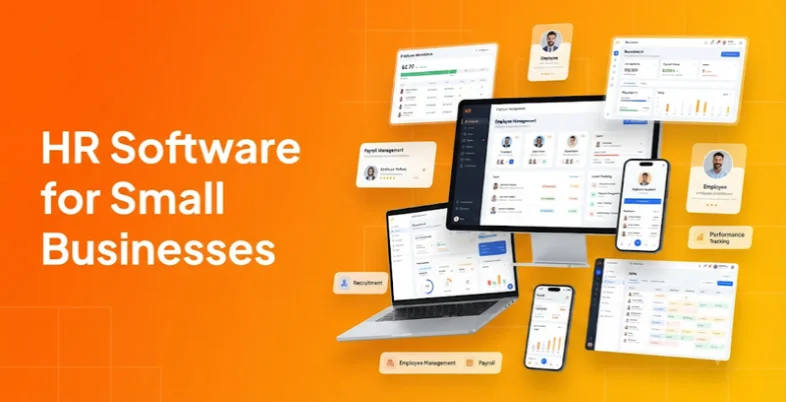
Managing employees shouldn’t feel like managing a mountain of paperwork. From tracking attendance and processing salaries to handling employee records and leave requests, HR responsibilities can quickly become overwhelming for small businesses with limited resources. That’s where the right HR software can make a real difference. The best HR software for small businesses helps automate repetitive administrative tasks, simplify payroll management, improve employee communication, and keep important workforce information organized in one place.
Whether you’re running a startup with five employees or managing a growing team of 100, these tools can help you save time, reduce manual errors, and build more efficient HR processes without hiring a large HR department. However, not every platform offers the same features, pricing, or flexibility. In this guide, we’ll explore the best HR software platforms for small businesses, highlighting their key features, benefits, limitations, and suitability to help you find the right solution for your company’s needs and budget.
Why Do Small Businesses Need HR Software?
Managing HR operations manually may seem manageable when a business has only a handful of employees. However, as the team grows, tracking attendance, maintaining employee records, processing payroll, and handling leave requests can quickly become time-consuming. HR software helps small businesses bring these activities together in one centralized platform, while team collaboration software supports better communication and coordination. Instead of relying on spreadsheets, paperwork, and multiple disconnected tools, businesses can streamline daily operations. Here are some important reasons why investing in HR software can benefit small businesses:
- Saves Time on Administrative Tasks: Automates repetitive activities such as attendance tracking, leave approvals, employee data updates, and payroll calculations, allowing HR teams to focus on more important responsibilities.
- Reduces Payroll Errors: Helps calculate salaries, deductions, reimbursements, and tax-related contributions accurately while reducing manual calculations.
- Improves Employee Experience: Employee self-service portals allow staff to access payslips, update personal information, check leave balances, and submit requests independently.
- Keeps Employee Records Organized: Stores employee documents, contracts, performance information, and other important records in one accessible location.
- Supports Business Growth: Makes it easier to manage increasing employee numbers, introduce structured HR policies, and maintain consistent processes as the company expands.
- Simplifies HR Compliance: Helps businesses manage payroll-related statutory requirements, maintain records, and generate relevant compliance reports.
Essential Features to Look for in HR Software for Small Businesses
Before investing in a platform, it’s important to understand which capabilities can make the biggest difference to your team’s daily operations. Here are some essential features to consider:
- Core HR Management: Look for a centralized employee database that stores contact details, employment history, job roles, documents, and other important information. This makes employee information easier to access and update.
- Payroll Management: Choose software that automates salary calculations, deductions, payslips, reimbursements, and tax-related activities. For Indian businesses, PF, ESI, TDS, and professional tax support are particularly important.
- Attendance and Leave Tracking: The platform should offer attendance monitoring, shift scheduling, leave balances, and automated approval workflows to reduce manual tracking.
- Recruitment and Onboarding: Recruitment tools, applicant tracking, digital documentation, and onboarding checklists help small businesses manage new hires without maintaining separate spreadsheets.
- Performance Management: Features such as goal setting, performance reviews, feedback collection, and appraisal tracking help businesses monitor employee development.
- Employee Self-Service: Employees should be able to access payslips, update personal details, request leave, and view important HR information through a web portal or mobile application.
- Reporting and Analytics: HR reports covering attendance, employee turnover, payroll expenses, and workforce trends help business owners make better management decisions.
- Integration and Scalability: Check whether the software integrates with accounting, biometric attendance, and other business applications. It should also accommodate additional employees and changing HR requirements as your company grows.
List of Best HR Software for Small Businesses in 2026
1. HROne
- Website: https://hrone.cloud/
- Best for: All-in-one HR management and Indian payroll compliance
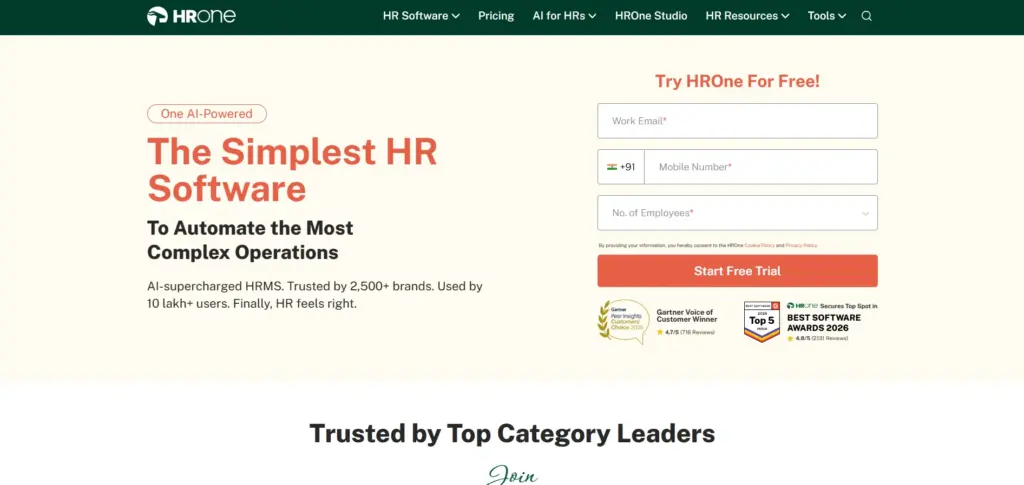
HROne is a cloud-based HR management platform designed to help small and medium-sized businesses simplify everyday HR operations. It brings employee management, payroll, attendance, recruitment, leave management, performance tracking, and expense management into one centralized system.
Its automated workflows reduce repetitive administrative tasks and make it easier for HR teams to manage employee requests, approvals, and documentation. HROne also supports Indian statutory requirements, including PF, ESI, TDS, and professional tax, making it particularly useful for businesses operating in India.
Its mobile application allows employees to access payslips, submit leave requests, and track attendance. With customizable workflows and integrated reporting, HROne helps growing companies manage their workforce more efficiently.
Key Features:
- Centralized employee database and document management.
- Automated payroll processing with PF, ESI, TDS, and professional tax compliance.
- Attendance tracking, leave management, and shift scheduling.
- Recruitment, onboarding, and employee lifecycle management.
- Performance management, expense tracking, and AI-powered HR assistance.
Pros:
- Offers multiple HR functions through one integrated platform.
- Automates payroll and statutory compliance for Indian businesses.
- Mobile application makes employee self-service convenient.
- Customizable workflows help reduce repetitive HR tasks.
Cons:
- Advanced workflows may feel complicated for very small teams.
- Some features require higher-tier subscriptions.
- Implementation may require employee data preparation and configuration.
- Pricing can increase as employee headcount and module requirements grow.
Pricing:
- Basic: ₹4,950/month
- Professional: ₹6,500/month
- Enterprise: Custom pricing
2. Zoho People
- Website: https://www.zoho.com/
- Best for: Budget-conscious small businesses and Zoho users
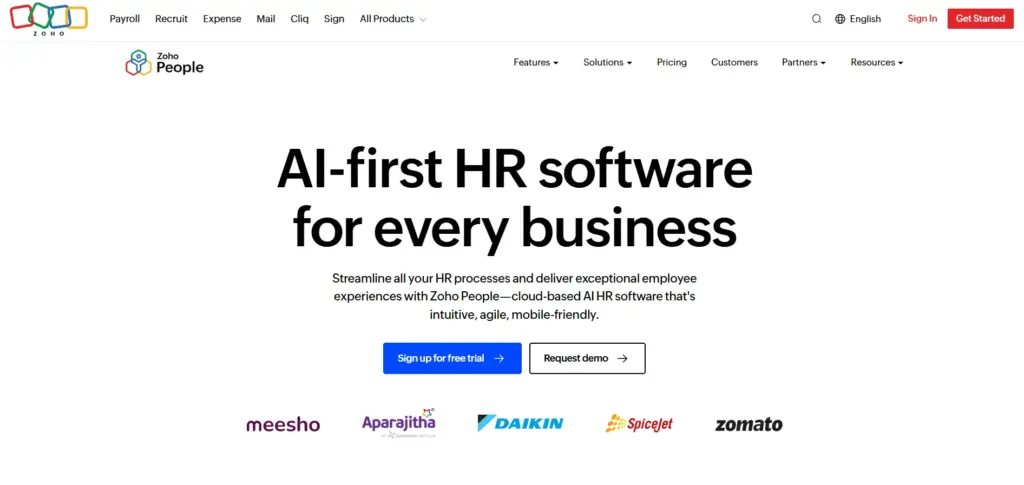
Zoho People is a cloud-based HR software solution that helps small businesses manage employee information, attendance, leave, performance, and everyday HR activities. It provides a centralized employee database where HR professionals can maintain records, manage documents, and monitor workforce information.
The platform offers employee self-service features, allowing staff to submit leave requests, access company policies, and update personal details without depending on HR for every task. Its integration with other Zoho applications makes it particularly useful for businesses already using Zoho CRM, Zoho Books, or Zoho Projects.
Companies can also connect HR operations with project management software to improve team coordination. Zoho People offers different pricing tiers, making it easier for growing companies to select features according to their requirements and budget.
Key Features:
- Employee database with centralized document management.
- Automated leave requests, attendance tracking, and shift scheduling.
- Employee self-service portal and mobile application.
- Performance management, goal setting, and appraisal tracking.
- Integration with Zoho applications and third-party business tools.
Pros:
- Affordable pricing options for small businesses.
- Offers a free plan for teams of up to three users.
- Integrates smoothly with other Zoho applications.
- Provides a user-friendly interface and employee self-service options.
Cons:
- Advanced features are available only in higher-priced plans.
- Payroll and statutory compliance require additional Zoho services.
- Some users report limitations in editing previously submitted records.
- Customization and reporting capabilities may require additional configuration.
Pricing:
- Premium: ₹192/user/month (annually) | ₹240/user/month (monthly)
- Enterprise: ₹350/user/month (annually) | ₹450/user/month (monthly)
3. Gusto
- Website: https://gusto.com/
- Best for: Small businesses managing US payroll and employee benefits
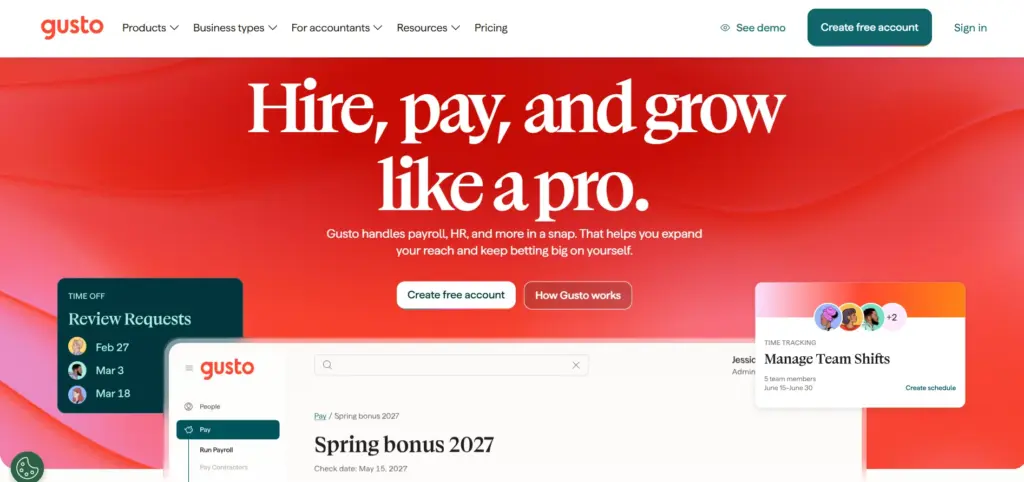
Gusto is an HR and payroll management platform designed primarily for small businesses in the United States. It combines payroll processing, employee benefits, onboarding, time tracking, and basic HR administration in one platform. Businesses can automate salary calculations, tax deductions, and payroll tax filings, reducing the time spent on manual financial administration.
Gusto also helps employers manage health insurance, retirement benefits, paid time off, and employee documentation. Its onboarding tools simplify the process of welcoming new employees through digital forms, electronic signatures, and employee information collection. The platform is particularly suitable for startups and small companies that want to manage payroll and employee benefits without building a large HR department.
Key Features:
- Automated payroll processing and tax filing.
- Employee benefits administration and retirement plan management.
- Digital onboarding with electronic signatures and employee forms.
- Time tracking, paid time off, and attendance management.
- Employee self-service portal with payroll and benefits information.
Pros:
- Simple and intuitive interface for small business owners.
- Automates payroll calculations and tax filings.
- Combines payroll and employee benefits management.
- Offers convenient employee onboarding and self-service tools.
Cons:
- Primarily designed for US businesses.
- Does not provide native Indian PF, ESI, and TDS compliance.
- Advanced payroll features require higher-priced plans.
- Additional services and benefits may increase overall costs.
Pricing:
- Simple: $49/month + $6/person/month
- Plus: $80/month + $12/person/month
- Premium: $180/month + $22/person/month
4. BambooHR
- Website: https://www.bamboohr.com/
- Best for: Employee management, onboarding, and HR administration
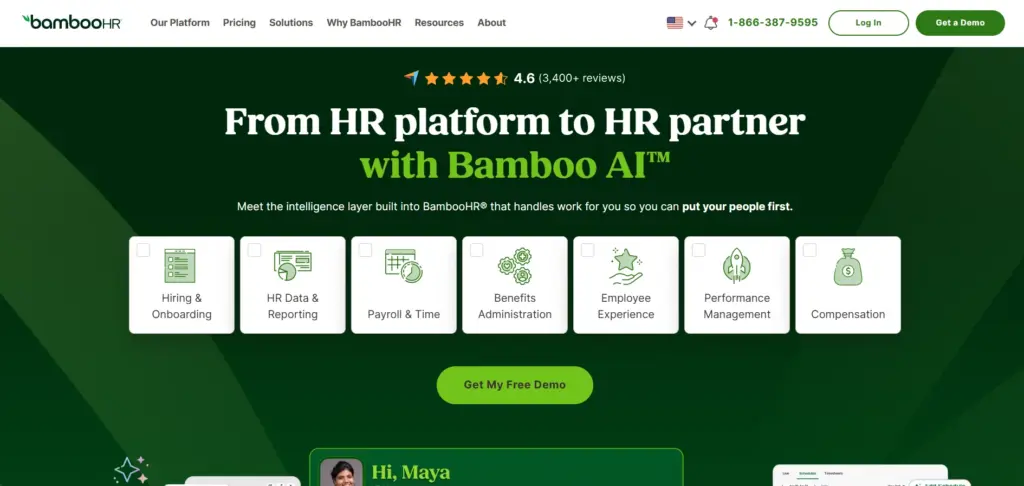
BambooHR is a cloud-based human resource management system designed for small and growing businesses that want to organize their employee information and simplify HR administration. It provides a centralized platform for managing employee records, onboarding, offboarding, leave requests, performance reviews, and workforce reporting. Its employee database helps HR teams maintain accurate information, access important documents, and track organizational changes.
BambooHR also offers onboarding workflows that help new employees complete paperwork and understand company processes more efficiently. Its reporting tools provide insights into employee turnover, headcount, and workforce trends. With its focus on employee experience and administrative efficiency, BambooHR is a suitable option for companies looking to replace spreadsheets and disconnected HR processes.
Key Features:
- Centralized employee records and organizational charts.
- Automated employee onboarding and offboarding workflows.
- Time-off management and leave tracking.
- Performance reviews, employee goals, and feedback management.
- HR reporting, analytics, and employee information management.
Pros:
- Easy-to-use interface suitable for small HR teams.
- Simplifies employee onboarding and documentation.
- Provides useful reporting and workforce insights.
- Centralizes important employee information.
Cons:
- Indian statutory payroll compliance is not available natively.
- Several advanced features require additional subscriptions.
- Pricing is not fully transparent on its website.
- Customization options may be limited for complex HR workflows.
Pricing:
- Core: $10/employee/month
- Pro: $17/employee/month
- Elite: $25/employee/month
5. greytHR
- Website: https://www.greythr.com/
- Best for: Indian small businesses managing payroll and statutory compliance
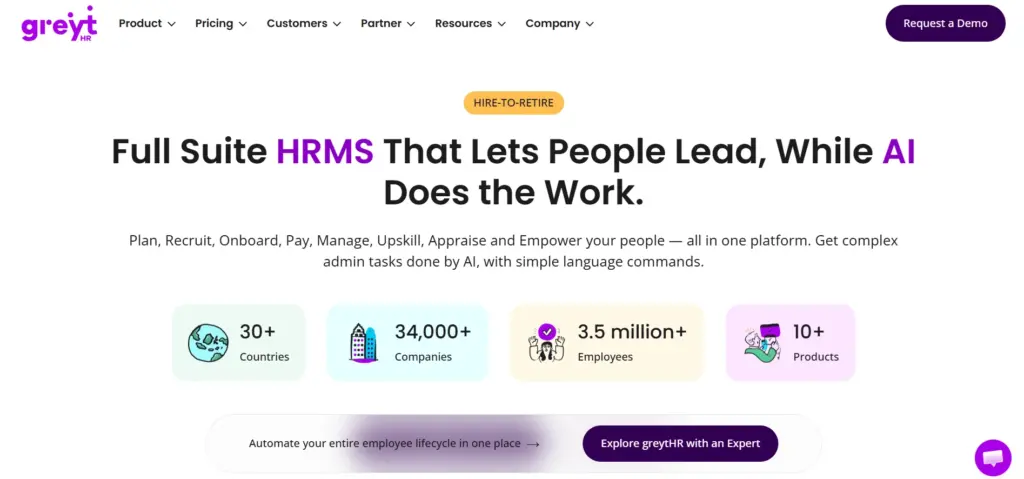
greytHR is an Indian HR and payroll software platform designed to simplify employee administration, salary processing, attendance, and statutory compliance. It helps small businesses manage their monthly payroll activities while reducing manual calculations and paperwork.
The platform supports important Indian payroll requirements, including Provident Fund, Employee State Insurance, professional tax, and income tax deductions. Its employee self-service portal allows employees to download payslips, submit leave applications, and access tax-related documents.
HR professionals can also manage attendance records, employee information, and statutory reports through a centralized dashboard. With affordable plans and a free entry-level option, greytHR is particularly useful for startups and small businesses looking for a practical solution to manage routine HR and payroll responsibilities.
Key Features:
- Automated payroll processing and salary calculations.
- PF, ESI, TDS, and professional tax management.
- Attendance tracking, leave management, and shift scheduling.
- Employee self-service portal for payslips and tax declarations.
- Statutory reports and payroll documentation.
Pros:
- Offers India-specific payroll and compliance capabilities.
- Provides a free plan for eligible small businesses.
- Simplifies monthly salary processing and payslip generation.
- Offers employee self-service features.
Cons:
- User interface may feel outdated compared with newer platforms.
- Advanced customization options can be limited.
- Some features have limited functionality on mobile devices.
- Customer support responsiveness can vary depending on the plan.
Pricing:
- Essential: ₹2,495/month
- Growth: ₹4,495/month
- Premium: Custom pricing
Suggested Read: Video Editing Software for Beginners
6. Keka
- Website: https://www.keka.com/
- Best for: Growing businesses looking for modern HR and payroll management
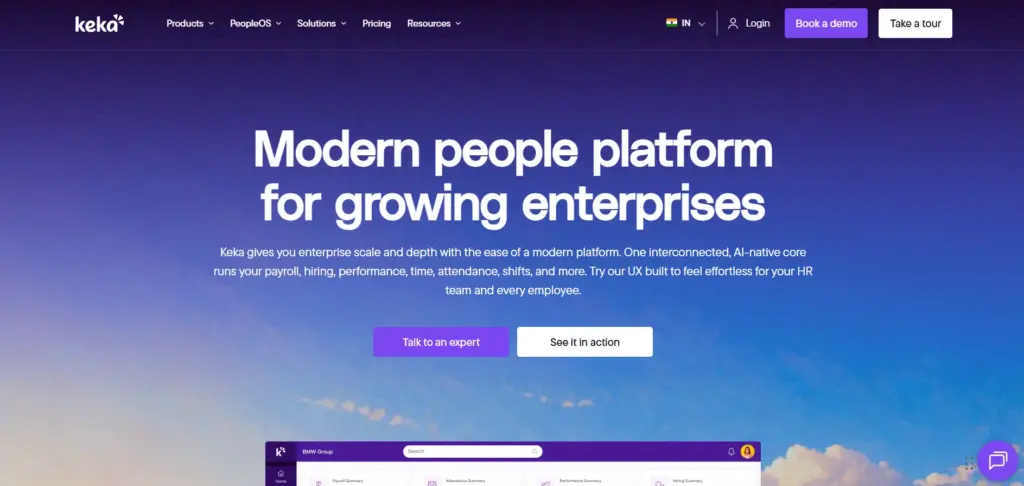
Keka is an Indian HRMS platform that helps small and medium-sized businesses manage employee information, payroll, attendance, recruitment, and performance management. It provides a centralized solution for automating routine HR activities and improving coordination between employees, managers, and HR teams.
Its payroll module supports salary calculations, payslip generation, and statutory deductions, including PF, ESI, and TDS. Keka also offers attendance tracking, leave management, shift scheduling, and employee self-service functionality. Businesses can use its performance management tools to establish goals, conduct appraisals, and monitor employee progress. Its modern interface and automation capabilities make it a suitable choice for growing companies that want to improve employee experience while reducing administrative workload.
Key Features:
- Automated payroll processing and statutory deductions.
- Attendance tracking, shift management, and leave automation.
- Recruitment and employee onboarding management.
- Performance management, OKRs, and appraisal tracking.
- Employee self-service portal and HR analytics.
Pros:
- Modern and visually appealing user interface.
- Combines payroll, attendance, and core HR functions.
- Supports Indian payroll and statutory compliance.
- Provides useful performance management capabilities.
Cons:
- Implementation timelines can vary significantly.
- Advanced modules may increase subscription costs.
- Some employees may face login difficulties without work email IDs.
- Payroll reporting and customization may require improvement.
Pricing:
- Custom pricing
7. PeopleStrong
- Website: https://www.peoplestrong.com/
- Best for: Businesses planning large-scale workforce expansion
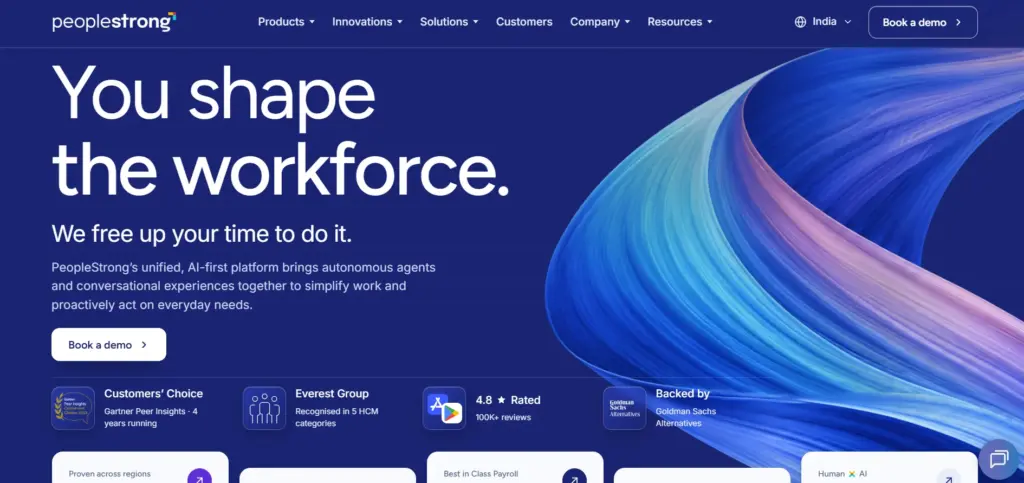
PeopleStrong is an enterprise-focused human capital management platform that helps organizations manage the complete employee lifecycle. Although it is primarily designed for larger businesses and mid-market organizations, growing companies exploring HR software for small businesses with complex HR requirements can also consider its capabilities.
The platform covers recruitment, employee management, payroll, workforce planning, performance management, and learning and development. Its centralized system allows HR departments to manage employee information across multiple locations and business entities.
PeopleStrong also provides analytics and reporting tools that help management understand workforce performance and make informed HR decisions. Its automation capabilities support recruitment, onboarding, employee development, and other administrative activities, making it suitable for organizations looking to establish structured HR processes as they expand.
Key Features:
- Centralized employee information and core HR management.
- Recruitment, applicant tracking, and onboarding automation.
- Payroll processing and workforce management.
- Performance management and employee development.
- HR analytics, reporting, and workforce planning.
Pros:
- Offers comprehensive employee lifecycle management.
- Suitable for businesses operating across multiple locations.
- Provides extensive recruitment and talent management capabilities.
- Supports enterprise-level workforce reporting and analytics.
Cons:
- May be too complex for very small businesses.
- Pricing is generally quote-based.
- Implementation can take longer than lightweight HR platforms.
- Some features may require specialist support and configuration.
Pricing:
- Subscription: ₹84,000/year (₹140 × 50 employees × 12 months).
8. Rippling
- Website: https://www.rippling.com/
- Best for: Businesses combining HR, IT, and employee administration
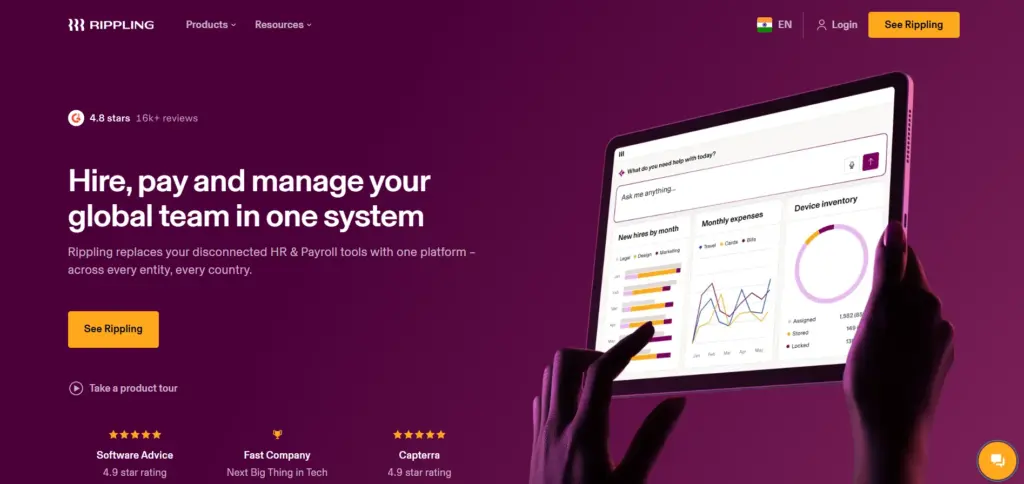
Rippling is a workforce management platform that brings HR, IT, payroll, and finance-related processes together in one centralized system. It helps small businesses automate employee onboarding, payroll administration, software access, and device management.
One of its distinguishing capabilities is connecting employee information with IT systems, allowing businesses to manage application permissions and company devices whenever someone joins or leaves the organization. Its HR module supports employee records, benefits administration, time tracking, and workflow automation.
Businesses can also use its reporting capabilities to monitor workforce information and administrative activities. Rippling is particularly useful for technology-driven companies that want to reduce manual work across HR and IT departments. However, Indian businesses should carefully evaluate its local payroll and statutory compliance coverage.
Key Features:
- Centralized employee records and workforce management.
- Automated onboarding and offboarding workflows.
- Payroll processing and employee benefits administration.
- IT device management and software access provisioning.
- Workflow automation and workforce reporting.
Pros:
- Combines HR and IT administration in one platform.
- Automates employee onboarding and offboarding.
- Provides flexible integrations with business applications.
- Helps improve employee data management and access control.
Cons:
- Indian statutory payroll coverage is limited.
- Additional modules can increase subscription costs.
- Pricing can be difficult to estimate without a customized quote.
- Some advanced configurations may require technical assistance.
Pricing: Custom pricing
9. factoHR
- Website: https://factohr.com/
- Best for: Small businesses with field employees and shift-based operations
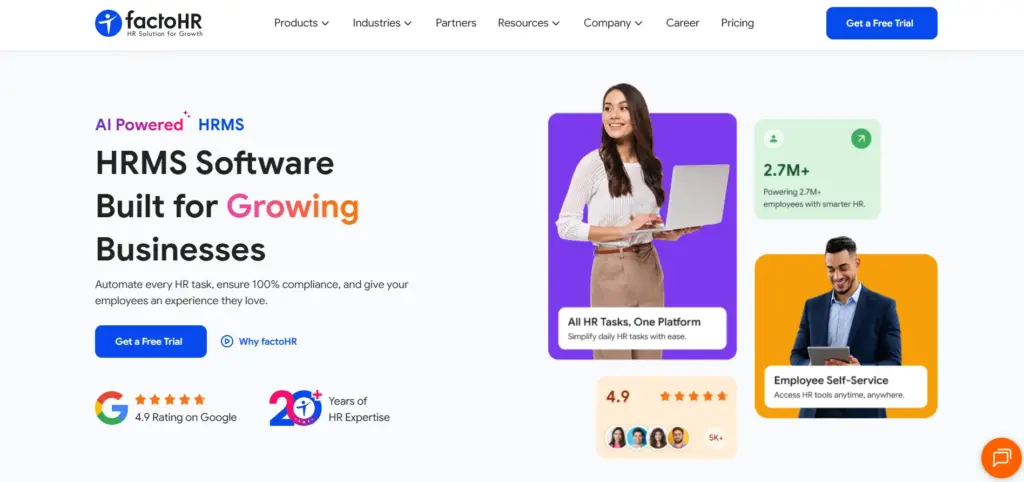
factoHR is an Indian HR and payroll management platform designed to help businesses automate employee administration, attendance, salary processing, and workforce management. It is particularly useful for organizations with manufacturing units, field employees, and shift-based teams that need accurate attendance records. As an HR software for small businesses, it offers biometric integration, geo-fencing, leave management, and mobile attendance tracking to simplify workforce monitoring.
Its payroll module supports Indian statutory requirements, including PF, ESI, professional tax, and TDS. Employees can use its self-service application to access payslips, apply for leave, and view important HR information. factoHR also provides performance management, expense tracking, and reporting capabilities, helping growing businesses manage multiple HR activities through a centralized platform.
Key Features:
- Payroll processing with PF, ESI, TDS, and professional tax.
- Biometric attendance and geo-fencing capabilities.
- Leave management and shift scheduling.
- Employee self-service mobile application.
- Performance management, expense tracking, and HR analytics.
Pros:
- Strong attendance and workforce management capabilities.
- Supports Indian payroll and statutory compliance.
- Offers biometric and geo-fencing integrations.
- Provides mobile access for field employees.
Cons:
- Performance and employee engagement features may lack depth.
- Advanced features are available in higher-priced plans.
- Biometric and third-party integrations may require additional setup.
- Some pricing components require quarterly billing commitments.
Pricing:
- Free Plan: ₹0/forever – Up to 20 employees.
- Core Plan: ₹4,999/month – Up to 50 employees; ₹99/month per additional employee.
- Premium Plan: ₹5,999/month – Up to 50 employees; ₹119/month per additional employee.
- Ultimate Plan: ₹6,999/month – Up to 50 employees; ₹139/month per additional employee.
10. Zimyo
- Website: https://www.zimyo.com/
- Best for: Budget-conscious small businesses looking for modular HR software
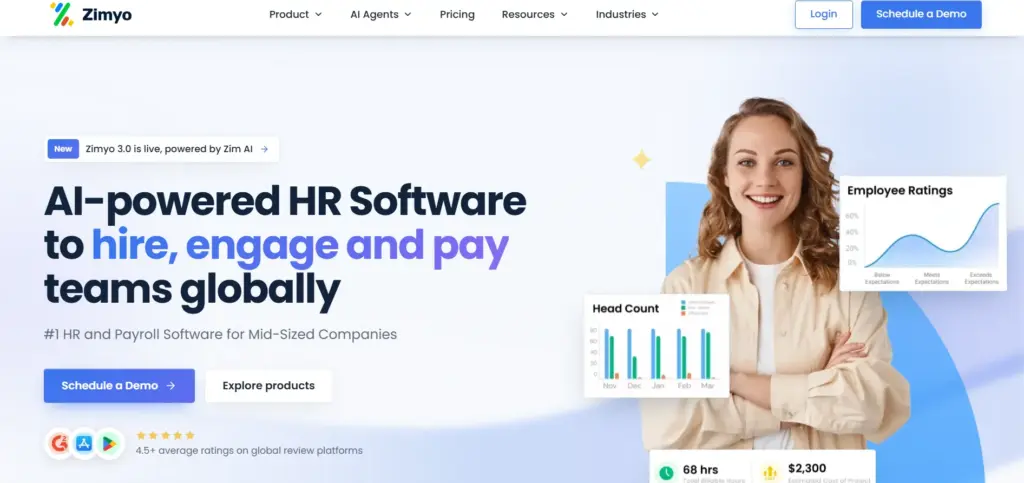
Zimyo is an HRMS platform designed to help small and medium-sized businesses streamline employee management, payroll, attendance, and performance-related activities. It offers modular solutions that allow companies to select HR functionalities according to their operational requirements and gradually expand as their workforce grows.
The platform includes employee self-service, leave management, payroll automation, attendance tracking, and performance management. Its payroll capabilities support Indian salary structures and statutory deductions, helping HR teams reduce manual calculations and administrative errors.
Zimyo also provides employee engagement tools, surveys, and reporting features that help businesses monitor workforce satisfaction and performance. Its flexible approach makes it a practical option for startups and growing organizations looking for essential HR automation without immediately investing in a large enterprise HRMS.
Key Features:
- Centralized employee database and HR administration.
- Payroll automation with Indian statutory deductions.
- Attendance tracking, leave management, and shift scheduling.
- Employee performance management and goal tracking.
- Employee engagement surveys and HR reporting.
Pros:
- Modular plans allow businesses to select required features.
- Offers affordable pricing options for smaller organizations.
- Supports essential Indian payroll requirements.
- Provides employee self-service and engagement tools.
Cons:
- Advanced reporting capabilities may be limited.
- Complex HR workflows may require additional configuration.
- Pricing and minimum employee requirements should be confirmed with the vendor.
- Customer support and customization experiences may vary.
Pricing:
HR Software Pricing
- Basic Plan: ₹80/user/month – Minimum billing for 50 users (₹4,000/month).
- Standard Plan: ₹160/user/month – Minimum billing for 50 users (₹8,000/month).
- Enterprise Plan: ₹240/user/month – Minimum billing for 50 users (₹12,000/month).
Add-ons Pricing
- AI Tokens: ₹20,000 per 10 million tokens (₹2 per 1,000 tokens; minimum purchase: 1 million tokens).
- HR Analytics: ₹20,000/license/month.
- Recruit (ATS): ₹4,000/recruiter/month.
- Timesheet: ₹40/user/month.
- Learn (LMS): ₹40/user/month.
- Trip Management: ₹40/user/month.
- Digital Signature: Contact sales for pricing.
- Payouts: Contact sales for pricing.
How to Choose the Best HR Software for Your Small Business
Choosing the right HR software for small businesses requires understanding your business needs, workforce size, budget, and essential features. Follow these steps to find a suitable solution.
- Identify Your HR Requirements: List your main challenges, such as payroll, attendance, leave management, and employee records.
- Consider Your Business Size: Choose software that supports your current employee count and allows you to scale as your business grows.
- Set Your Budget: Compare monthly and annual plans, per-employee charges, and additional implementation costs.
- Check Payroll and Compliance: Look for automated salary calculations, payslips, PF, ESI, TDS, and professional tax support.
- Compare Essential Features: Check employee management, onboarding, attendance, performance tracking, reporting, and automation.
- Evaluate Ease of Use: Choose a platform with simple navigation, an easy dashboard, and mobile access for employees.
- Check Integrations: Ensure the software connects with your existing accounting tools, biometric devices, CRM, and other business applications.
- Review Security and Support: Look for data encryption, access controls, regular backups, and reliable customer support.
- Try a Demo or Free Trial: Test important features and involve HR staff and employees before purchasing a subscription.
- Compare and Finalize: Compare shortlisted platforms based on pricing, features, usability, compliance, and scalability before making your decision.
Common Mistakes to Avoid When Choosing HR Software for Small Businesses
Here are some common mistakes to avoid when selecting an HR solution.
- Choosing Software Based Only on Price: An inexpensive platform may seem attractive initially, but it might lack essential features such as payroll automation, compliance management, or employee self-service. Always compare the overall value rather than selecting the cheapest option.
- Paying for Unnecessary Features: Some HR platforms offer advanced modules that small businesses may not need immediately. Purchasing features such as complex workforce analytics or enterprise-level talent management can increase expenses without delivering much practical value.
- Ignoring Indian Payroll Compliance: Businesses operating in India should check whether the software supports applicable payroll requirements, including PF, ESI, TDS, and professional tax. Ignoring these capabilities can lead to additional manual work.
- Overlooking Employee Experience: Complicated dashboards and difficult navigation can discourage employees from using the platform. Choose software that makes everyday activities such as applying for leave, checking attendance, and downloading payslips simple.
- Not Checking Integration Capabilities: Selecting software that cannot connect with existing accounting systems, biometric devices, or business applications may create disconnected workflows and duplicate data entry.
- Skipping Product Demonstrations: Relying only on website descriptions or feature lists can lead to unrealistic expectations. Always request a demo or trial to understand how the platform performs in real working situations.
- Ignoring Data Security: Employee records contain confidential personal and financial information. Failing to evaluate security controls, access permissions, and data protection practices can expose your business to unnecessary risks.
Conclusion
Choosing the best HR software for small businesses is about finding the right balance between affordability, essential features, automation, and scalability. Whether you need help managing payroll, tracking attendance, maintaining employee records, or simplifying recruitment, the right platform can reduce administrative workloads and improve overall efficiency.
Tools such as HROne, Zoho People, greytHR, Keka, and factoHR offer different capabilities to support businesses with varying requirements and budgets. Before making a final decision, compare pricing plans, check payroll compliance, evaluate integrations, and request a product demonstration. Ultimately, invest in an HR solution that meets your current business needs while supporting your company’s future growth.
Frequently Asked Questions
1. What Is The Best HR Software For Small Businesses?
HROne, Zoho People, greytHR, Keka, and factoHR are popular options for small businesses, depending on their HR requirements and budget.
2. Is There Any Free HR Software For Small Businesses?
Yes, platforms such as Zoho People and factoHR offer free entry-level options with certain user or feature limitations.
3. How Much Does HR Software Cost For Small Businesses In India?
HR software pricing in India can start from free plans and range from approximately ₹80 to ₹300 or more per employee per month, depending on features and vendor pricing.
4. What Features Should Small Businesses Look For In HR Software?
Essential features include employee management, payroll processing, attendance tracking, leave management, employee self-service, and HR reporting.
5. Is Cloud-Based HR Software Suitable For Small Businesses?
Yes, cloud-based HR software allows businesses to access employee records, manage HR activities, and process requests from different locations without maintaining their own software infrastructure.